
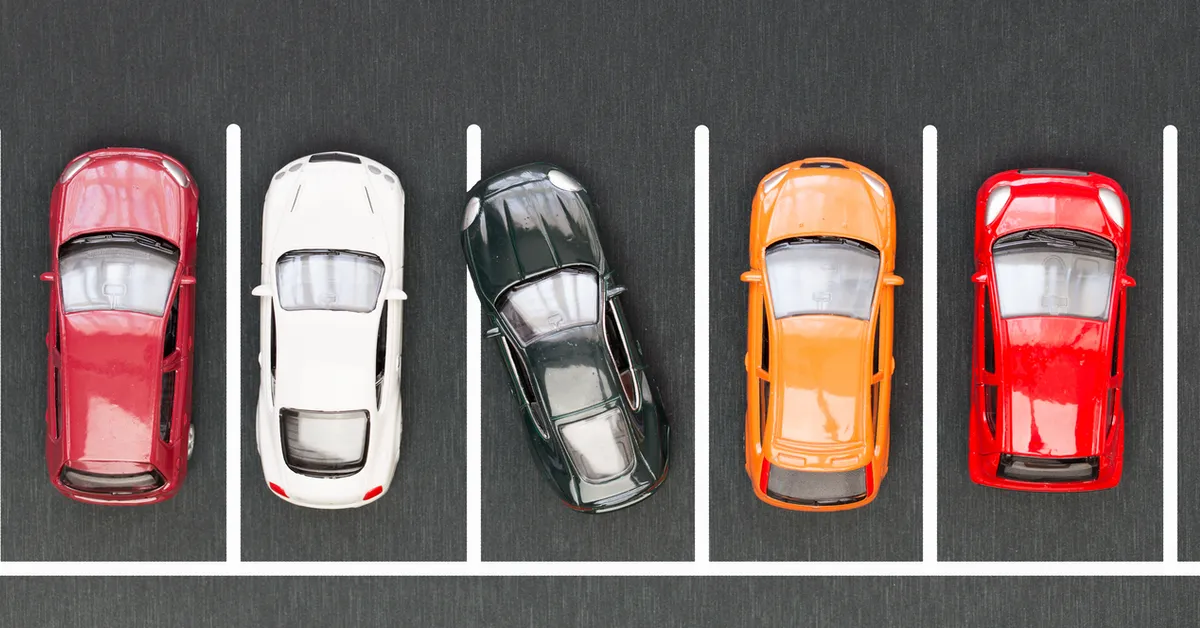
For starters, new figures show that private parking tickets have reached a record high. There has also been more scrutiny over how private parking companies deal with things like appeals and extra charges, while changes around pavement parking in England have added even more to the conversation.
With so much being talked about, it’s easy for the actual rules to get a little lost. So, if you’re not completely sure where that leaves you, here’s a straightforward look at what’s actually happening and what you need to know as a driver.
Private parking tickets are at a record high
One of the main reasons parking has been getting so much attention is the number of private parking tickets now being handed out. 16.9 million were issued between April 2025 and March 2026, which works out at more than 46,000 a day. Just a year earlier, that figure was 14.4 million, so it’s a noticeable increase.
Part of the reason is that private parking enforcement has become much more common. More car parks are using things like Automatic Number Plate Recognition (ANPR) cameras to track when cars arrive and leave, which means it's much easier to get caught out if you overstay or don’t follow the car park's terms.
This has drawn more attention to how private parking companies operate. In July 2026, the Competition and Markets Authority (CMA) raised concerns around things like appeals and the extra fees that can be added to parking charges. So whilst getting a private parking ticket certainly isn’t a new thing, the number being issued and how drivers are treated when they receive one are now central to the conversation.
The 10-minute grace period
The 10-minute grace period is another one you might have heard about, and this actually has some truth to it. The important thing is understanding when it applies.
In applicable council parking spaces, you can get a 10-minute grace period once your authorised parking time has ended. Private parking operators following the industry Code of Practice should also allow a grace period at the end of a permitted stay before issuing a fine.
The grace period gives you a little extra time to leave the car park once your permitted stay has finished, rather than giving you extra free parking at the beginning. It might sound like a small difference, but it’s an important one if you ever find yourself appealing a parking charge for overstaying by a few minutes.
Blue Badge rules can be different in private car parks
If you use a Blue Badge, it’s worth knowing that the rules you’re familiar with on public roads don’t necessarily work in exactly the same way when you move onto private land.
The Blue Badge scheme gives eligible drivers and passengers certain parking concessions, but it doesn’t automatically apply to private car parks in the same way. Places like supermarkets, shopping centres and hospitals can have their own rules around accessible parking spaces.
That means having a Blue Badge doesn’t necessarily mean you can ignore the terms displayed in a private car park. Check the signs when you arrive, particularly somewhere unfamiliar, so you know whether you need to display your badge, register your vehicle or follow any other conditions.
A private parking charge and a council fine aren’t the same thing
They might look very similar when they land on your windscreen or through your letterbox, but there is an important difference between a council Penalty Charge Notice and a private parking charge.
A council PCN is an official penalty backed by legislation. A private parking charge is issued by a company that manages private land, such as a supermarket, retail park or privately operated car park, usually because it believes you’ve broken the terms of parking there.
That doesn’t mean you should ignore a private parking charge. If you don’t pay or successfully appeal it, the company can potentially pursue the money through the civil courts.
If you think you’ve been charged incorrectly, keep anything that could help you prove it. That could include photographs of the signs, your parking receipt, screenshots from a parking app or evidence that your car had broken down. Even something as simple as proving you paid but accidentally entered your registration incorrectly could be useful when making an appeal.
Private parking charges aren’t being capped at £50 yet
You might have heard that private parking charges are now being capped at £50, but that isn’t actually the case.
Plans to introduce lower caps have been around for a while. A government Code of Practice published in 2022 proposed changes to private parking charges, but it was withdrawn later that year following legal challenges. The government has since been working on a new statutory Code of Practice, but as of September 2026, those new rules aren’t in force.
For now, private parking charges can still be as high as £100, depending on the circumstances, although you’ll usually be offered a reduced amount if you pay within a certain timeframe. If you receive a charge for more than £50, don’t assume it must be a mistake simply because you’ve seen headlines suggesting a new cap has been introduced.
Watch out for parking scams
It isn’t just parking charges you need to think about either. As more car parks have moved towards apps, websites and cashless payments, scammers have found ways to take advantage of drivers who are simply trying to pay.
One to be particularly careful of is fake QR codes on parking machines. A scammer can place their own QR code over the genuine one, which then sends you to a fake payment website designed to collect your card details. Because you’re standing next to a real parking machine at the time, there’s a good chance you won’t immediately question it.
Where possible, use an official parking app you’ve already downloaded or find the operator’s app yourself through your phone’s app store. If you do scan a QR code, take a second to check the website address before entering any payment details.
The same goes for unexpected texts claiming you’ve got an unpaid parking fine. If a message tells you to pay immediately or threatens that the amount will increase, don’t automatically click the link. Go directly to the council or parking operator’s official website instead and check whether the charge is genuine. Suspicious texts can also be forwarded to 7726 for extra confirmation.
Pavement parking rules are changing, but not everywhere just yet
Pavement parking has probably been one of the more confusing parts of the recent coverage, particularly because the rules already differ depending on where you are in the UK.
In London, pavement parking has been prohibited for years unless signs specifically allow it, while Scotland has its own nationwide restrictions. For most of England outside London, however, there isn’t currently a blanket pavement parking ban.
What has changed in 2026 is that the government has moved towards giving local authorities in England more power to tackle pavement parking in their own areas. That means councils could eventually have more control over where it is allowed and where drivers can be penalised, but it doesn’t mean every council can suddenly start handing out fines for pavement parking everywhere from September.
Regardless of the rules where you live, you should consider much space you’re leaving. Parking partly on a pavement might seem harmless, but it can make it difficult for wheelchair and mobility scooter users, or parents with prams, to get past.
Can you park outside someone else’s house?
Parking on residential streets can cause plenty of disagreements, particularly when someone parks outside a house that isn’t theirs. And as annoying as that can be, if it’s a public road and there aren’t any restrictions in place, you’re generally allowed to park there.
There are limits, of course. You shouldn’t park somewhere that causes an obstruction or prevents somebody from accessing their property, and some residential areas have permit schemes that restrict who can park there and when.
So while somebody might not be particularly happy to see your car outside their house, that alone doesn’t mean you’ve done anything wrong.
When keeping your car starts to feel like more trouble than it's worth
If your old car no longer runs, one thing you can’t do is leave it on a car park or residential street. Often, your best option is to scrap your car. Just enter your registration and postcode into our online tool, and we'll give you an instant quote!
If you decide to go ahead, we'll arrange collection at a time that suits you and make sure your vehicle is taken to an authorised treatment facility (ATF), where its parts and materials can be recovered and recycled responsibly.